I get asked about Craniosacral Therapy a lot. Usually by people who’ve already tried other things — physiotherapy, deep tissue massage, pain medication — and are still dealing with the same issue, just a little more frustrated than before.
So let me actually explain what it is, how I use it, and why it sometimes reaches places other approaches haven’t.
What Is Craniosacral Therapy?
Craniosacral Therapy (CST) was developed by osteopathic physician Dr. John Upledger following years of clinical research at Michigan State University. The core idea is that the craniosacral system — the membranes and cerebrospinal fluid surrounding the brain and spinal cord — has its own subtle rhythm. When restrictions develop in that system, they can affect the central nervous system, and by extension, almost everything else: pain levels, sleep, stress response, emotional regulation.
It sounds technical. In practice, it’s remarkably gentle.
I trained through the Upledger Institute — the original program founded by Dr. Upledger himself. For me, going back to the source mattered. When you’re working with something this subtle, you want a solid foundation.
What Actually Happens in a Session
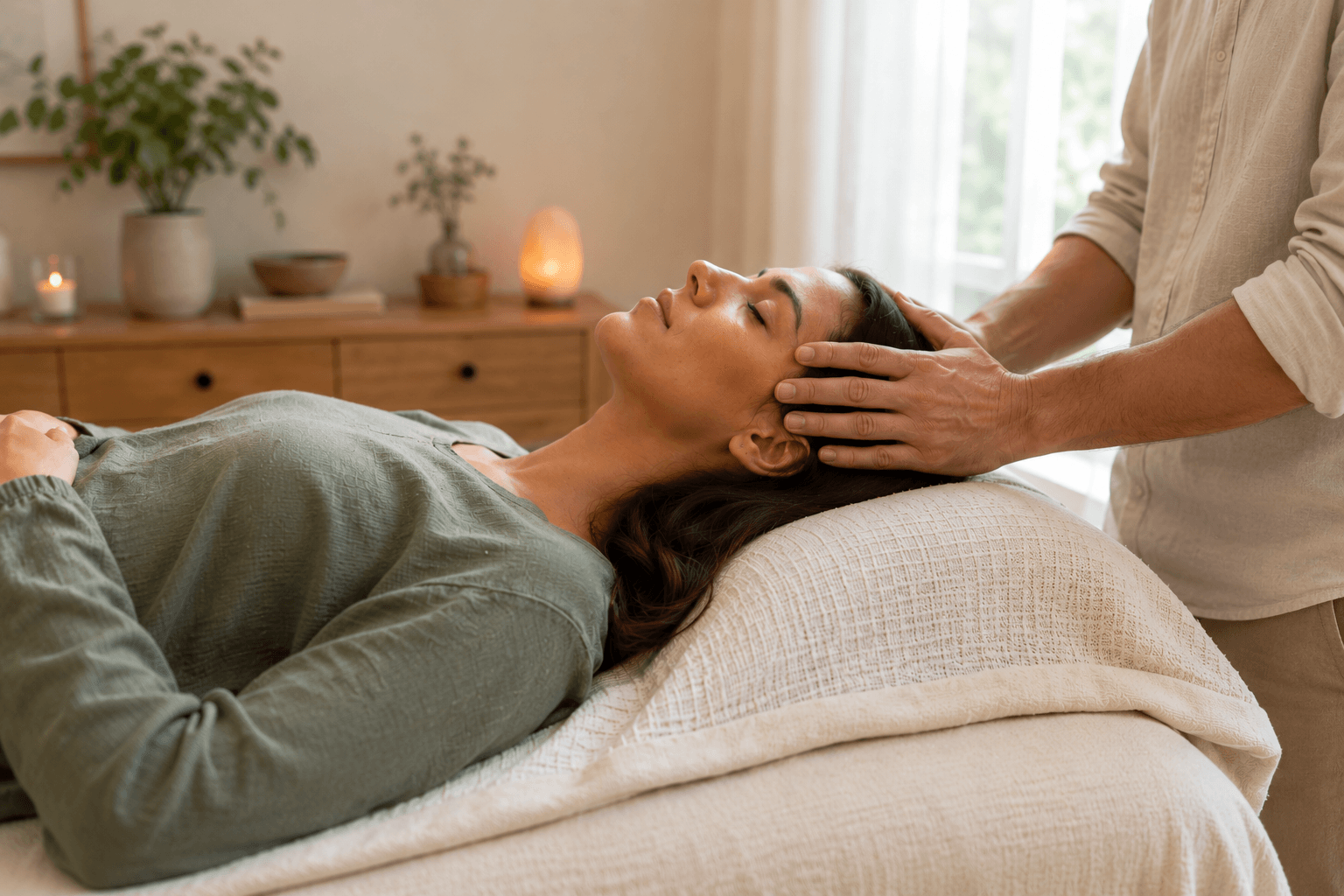
You stay fully clothed. You lie on the table. My touch is very light — around the weight of a coin, sometimes less.
But light doesn’t mean passive. I’m listening — to the rhythm of your craniosacral system, to where things feel compressed, braced, or stuck. The body holds an enormous amount of information, and with the right kind of attention, it starts to share it. That listening is the work.
What People Come In For
CST tends to work particularly well for:
- Chronic headaches and migraines
- Neck, back, and jaw pain — including TMJ disorders
- Stress and anxiety held physically in the body
- Post-trauma recovery
- Nervous system dysregulation — that wired-but-exhausted feeling that rest doesn’t fix
- Fibromyalgia and chronic fatigue
- Conditions that haven’t fully responded to other treatments
It’s also genuinely valuable for people who don’t have one specific complaint, but feel like they haven’t been able to fully let go of something. The body stores what the mind hasn’t fully processed, and CST is one of the more effective tools I know for helping it release.
For Babies Too
CST is one of the gentler — and more effective — tools available for newborns and infants. The birth process, even when it goes smoothly, places real pressure on a baby’s head and spine. CST can help address the residual patterns that sometimes show up afterward as sleeping difficulties, latching problems, colic, or general fussiness. The touch used with babies is even lighter than with adults, and sessions are short. Parents are often surprised by the results.
Is It Right for You?
CST is appropriate for most people, from newborns to older adults. If you’re unsure whether it’s right for your situation, reach out before booking. I’m happy to talk it through.
I’ve been doing this work in Jerusalem for over 20 years, and the body never stops surprising me.
👉 To book a session or ask a question, reach out on WhatsApp: wa.link/25k6fr